By Ophelia Anderson
There are movie stars who dazzle with charisma, and then there are movie anchors – performers whose steady presence brings emotional weight and grounded humanity to even the most chaotic on-screen circumstances. Gerard Butler sits firmly in the latter category. For nearly two decades, he has occupied a rare space in the action genre: a leading man who embodies grit and vulnerability equally.
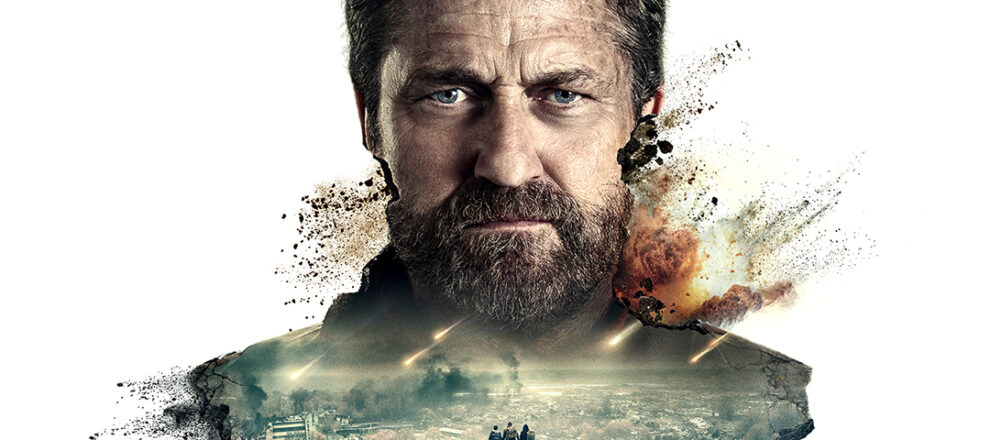
With GREENLAND 2: MIGRATION, arriving in South African cinemas on 9 January, Butler revisits one of the most layered characters of his career – John Garrity. This time, the world has already ended, and the fight is no longer about escape, but renewal. It’s a challenge Butler embraces with the intensity and sincerity that have come to define his recent work.
A Career Built on Determination
Butler’s rise to Hollywood wasn’t automatic. Before acting, he studied law, only turning to performance after realising his true passion lay elsewhere. “I wasn’t supposed to be an actor on paper,” Butler once reflected in an interview. “But there was something inside me that just wouldn’t let go of the idea.”
His breakout role in 300 (2006) highlighted his commanding physicality, but it was the emotional undercurrent of his performances – even in large-scale action films – that drew audiences in. After years of alternating between blockbusters, thrillers and intimate dramas, Butler found a sweet spot: grounded survival films with flawed, relatable protagonists.
Why John Garrity Resonated Globally
When Greenland debuted in 2020, audiences were caught off guard – in the best possible way. Instead of leaning into spectacle, the film prioritised character, particularly the Garrity family navigating a global extinction-level event.
Butler quickly became the emotional centrepiece.
“I didn’t want to play John like a superhero,” Butler has said. “He’s an ordinary guy. He makes mistakes. He panics. He wants to give up sometimes. But he keeps going because his family needs him.”
This approach struck a chord. Viewers saw themselves in John’s fear and determination. Critics praised Butler’s quieter, more intimate acting style – one that allowed the disaster to feel not just big, but personal.
Director Ric Roman Waugh has often noted Butler’s instinct for emotional truth. “Gerry has this extraordinary ability to make you believe every moment,” Waugh said during early discussions of Migration. “He carries the film because he never pretends the danger is easy. He lets you feel the weight of it.”
Returning to a World in Ruins
GREENLAND 2: MIGRATION picks up after the impact. The Garrity’s must journey across a devastated landscape in search of lost family and a new future. For Butler, this sequel offered a different kind of challenge.
“The first film was about survival,” Butler explains. “This one is about rebuilding – physically, emotionally, spiritually. John has to figure out what being a husband and father looks like in a world that has completely changed.”
Waugh echoes this sentiment: “We wanted to explore not just the fight to stay alive, but the fight to stay human. And Gerry was the perfect collaborator because he’s always pushing for honesty above everything else.”
The Gerard Butler Effect
What continues to set Butler apart is his ability to portray masculinity that feels both strong and fragile, a combination audiences crave in an age of hyper-stylised action heroes.
Butler acknowledges this tension: “I never want to play invincible characters. People connect with imperfection. They relate to someone who’s scared but keeps moving.”
It’s a philosophy that shapes his role choices and his performances. Even in high-concept stories, Butler gravitates toward emotional authenticity.
Producer Alan Siegel, Butler’s long-time partner at G-Base, captures it well: “Gerry always asks the same question: ‘Why should the audience care?’ If he doesn’t find the heartbeat of a film, he won’t do it. With Migration, that heartbeat is incredibly strong.”
Influencing the Film Behind the Scenes
Butler’s creative hand extends far beyond acting. Through G-Base, he is hands-on with story development, tone, and character integrity.
“We had long conversations about what hope looks like after catastrophe,” Waugh says. “Gerry wanted the film to remind people that even when the world collapses, the bonds we fight for matter more than anything.”
This collaborative energy shapes Migration into a story that feels lived-in rather than fantastical.
Butler describes the process as “raw and personal.”
“We all asked ourselves, ‘What would we do if everything fell apart? What would we fight for?’ Those questions guided the film.”
Why South Africans Are Drawn to Him
Butler’s films consistently perform well locally, tapping into South Africa’s appetite for emotionally driven action and survival narratives.
“I’ve always felt a huge amount of love from South Africa,” Butler said during past promotional tours. “The audiences there respond to authenticity – and that pushes me to keep giving everything.”
This connection is clear: South African moviegoers respond to stories about resilience, families under pressure, and everyday heroes – all hallmarks of Butler’s work.
A Leading Man for This Moment
As the industry shifts toward larger-than-life universes, Butler’s appeal remains refreshingly grounded. He champions characters that audiences feel they could become – or already are.
“I think people want to see themselves in the story,” Butler explains. “They want to believe they could step up if the world went dark. That’s why these films matter.”
With GREENLAND 2: MIGRATION, Butler once again delivers the emotional authenticity that audiences crave, reminding us that true heroism comes not from superpowers but from stubborn determination and love.
Waugh summarises it best: “Gerry doesn’t just play heroes. He plays human beings trying to survive. And that’s why people follow him.”